
Three central area permits will not transfer when the filters start on 28 September, and unused visitor day passes die with them. What to do before then.
Oxfordshire County Council made the order on 24 August that switches Oxford’s congestion charge for traffic filters. It comes into force on Monday 28 September. Most people who hold a congestion charge permit do not have to do anything. Three groups do, because their permits are being scrapped and not replaced.
The order is published in full on the Public Notice Portal. It is an experimental traffic management order, so it is a trial rather than a permanent change.
The three permits that end
The council created a central permit area for the temporary congestion charge, covering the small part of the city that could not be reached by car without passing a charging point. With Botley Road due to reopen on 20 September, the council says every part of Oxford will be reachable without passing a filter, so the central permit area is being abolished.
These three permits will not be transferred:
- the central permit area resident’s visitor permit
- the central permit area workplace parking users permit
- the central permit area sports clubs, nurseries or military training permit
Holders may qualify for a different traffic filter permit, but they have to apply for it. Nothing happens automatically.
Central permit area resident permits are the exception. Those do transfer, into the Oxford permit area, and come with 100 day passes.
Unused day passes do not carry over
This is the part with a real deadline attached. The council says that if a temporary congestion charge resident’s permit has unused day passes when the trial starts, they will not be carried over to the new scheme.
Day pass allocations reset when the trial begins:
- 100 free day passes a year for Oxford permit area residents.
- 25 free day passes a year for Oxfordshire permit area residents.
If you are sitting on unused passes, they are worth nothing after 27 September.
Motorhomes are caught, and most people do not realise
The filters restrict M1 vehicles, which is the DVLA’s classification for a passenger car. Vans, lorries, minibuses, coaches, motorbikes, mopeds and scooters are all exempt and never need a permit.
The council points out that the DVLA usually classifies a motorhome as M1 as well. If you drive one, the filters apply to you exactly as they would to a car. The field to check is “vehicle type approval” on your V5C.
Permits are virtual. Nothing arrives in the post and nothing goes in the windscreen. The cameras read the plate and look for a linked permit.
The bigger change: you can no longer pay
Under the temporary congestion charge, a driver without a permit could pay £5 and drive through. Under the filters that option does not exist. A car without a permit that passes during operating hours gets a penalty charge notice of £70, reduced to £35 if paid within 21 days.
For the first six months of the trial, the first time a car goes through without a permit the council will send a warning notice instead of a fine.
The six locations and their hours are unchanged from the congestion charge:
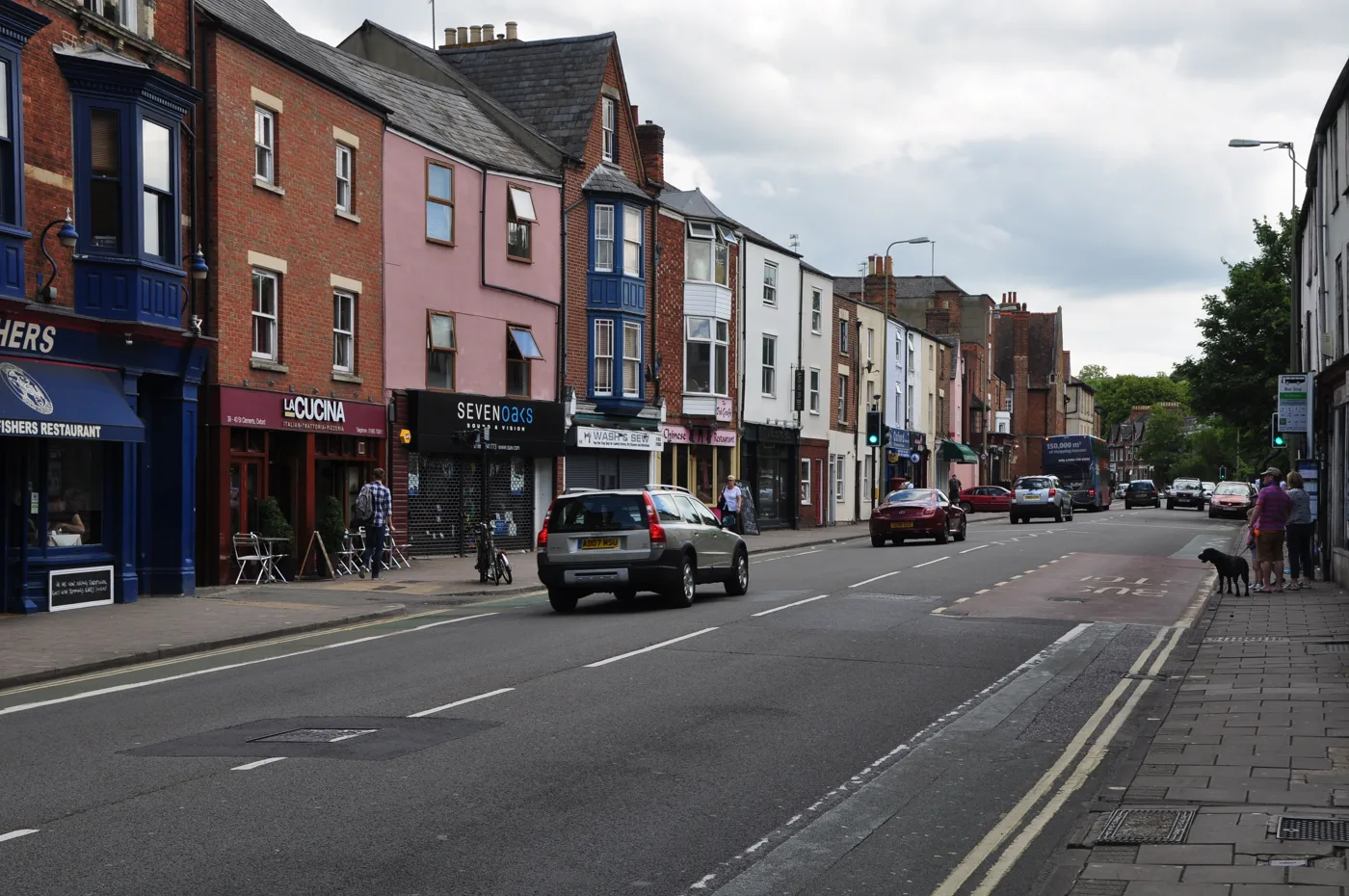
- 7am to 7pm every day: Hythe Bridge Street west of Rewley Road, St Clements east of Boulter Street and Jeune Street, St Cross Road south of Manor Road, and Thames Street east of Blackfriars Road.
- 7am to 9am and 3pm to 6pm, Monday to Saturday: Hollow Way between James Wolfe Road and Dene Road, and Marston Ferry Road west of the access to The Swan School.
Who can still get a permit
The council lists 20 permit types. All of them are free. Alongside the Oxford and Oxfordshire resident permits, they cover:
- Blue Badge holders, organisational Blue Badge holders and disabled tax class vehicles
- unpaid carers, frequent hospital patients and disability benefit claimants
- personal cars used by community health or care workers
- school students with special educational needs, and school cars used for home-to-school transport
- firefighters, magistrates driving to Oxford Magistrates’ Court, and approved driving instructors
- hackney carriages and private hire vehicles, car club cars, organisational pool cars, hearses and funeral cars
- business and personal cars used as goods vehicles
The legal timetable, and how to object
The order was made on 24 August 2026 and comes into force on 28 September. As an experimental order it can run for a maximum of 18 months.
Two windows follow from those dates:
- Anyone may object to the order being made permanent within six months of 28 September. Objections go to the traffic filters team at County Hall, or to trafficfilters@oxfordshire.gov.uk. The detailed particulars are on the council’s Let’s Talk site.
- Anyone arguing the order is outside the council’s powers has six weeks from 24 August to apply to the High Court. That window closes in early October.
The start date is conditional. The council has tied it to Network Rail reopening Botley Road on Sunday 20 September.
What it means for you
- If you hold any congestion charge permit, check which one. Three central area permits die on 28 September and the council will not move you across. Everyone else is transferred without applying.
- Spend unused day passes before 27 September. They are not carried over and they are not refunded.
- If you drive a motorhome, check your V5C. An M1 classification means the filters apply to you.
- The council says it will write to permit holders, but only after the start date is confirmed, which leaves a short window. Do not wait for the letter if your permit is one of the three.
Also on The Oxford Post
- Oxford roadworks and travel: what is closed this week, and the full filter timetable.
- Parking in Oxford: car parks, on-street charges and Blue Badge rules.
- Oxford planning news: the Local Plan 2045 and the sites allocated for homes.
Have your say