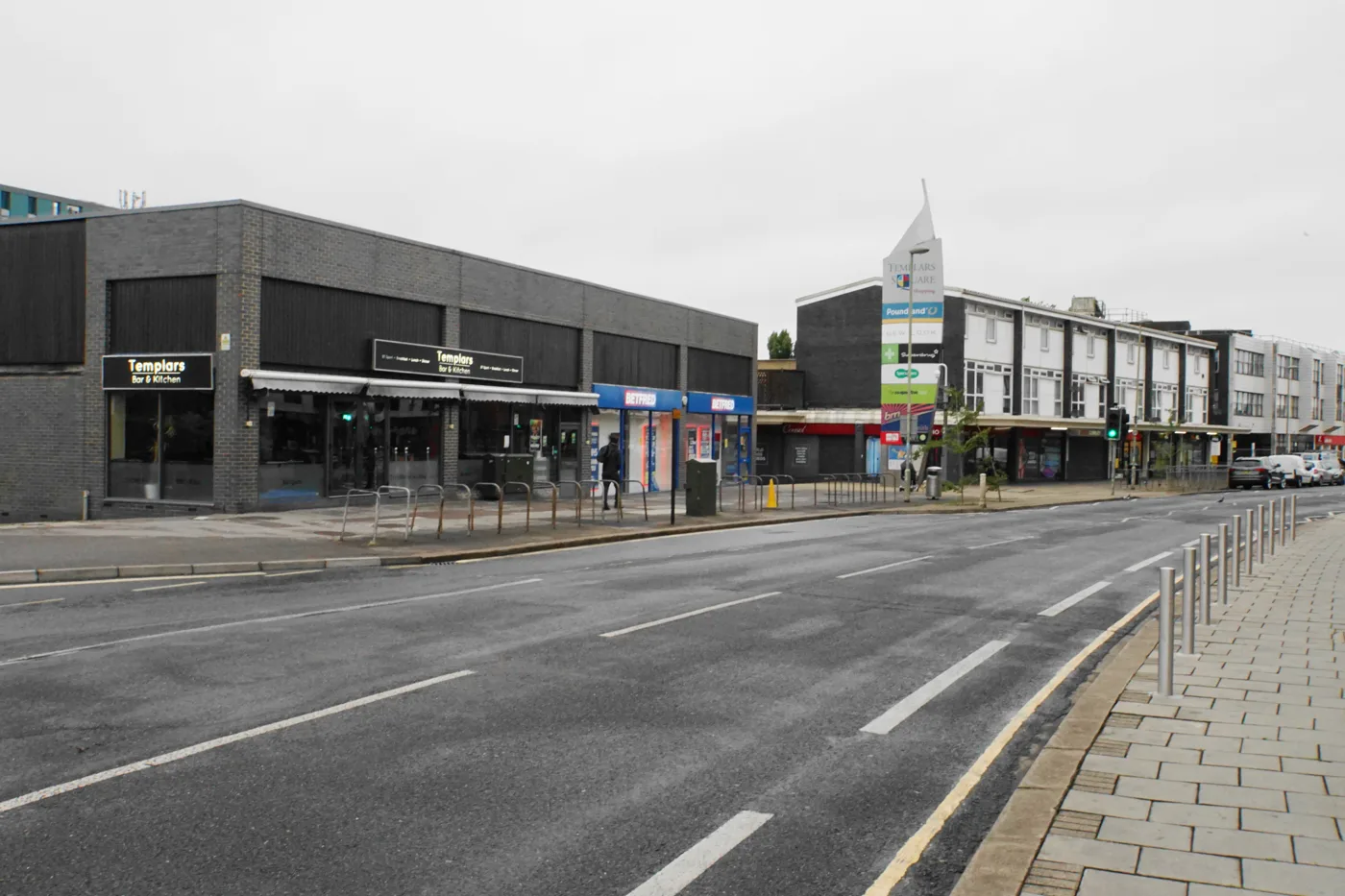

Oxford's Local Plan 2045 went to the Secretary of State on 14 July with a target of 9,267 homes, 43% of assessed need. What that means for applications now.
Oxford is in the most consequential moment its planning system has had in years, and most of it turns on one number: the city cannot fit the homes the government says it needs.
The submission draft Oxford Local Plan 2045 was submitted to the Secretary of State on 14 July 2026, which starts its public examination. Everything below comes from the council’s own documents.
Where the plan is right now
- The plan in force is still the Oxford Local Plan 2036, adopted at full Council on 8 June 2020.
- It is now more than five years old, which under national policy means its housing policies are no longer automatically treated as up to date.
- The Local Plan 2045 was submitted on 14 July 2026. The council anticipates examination hearings in autumn or winter 2026 and adoption around May 2027, though the timetable is the Planning Inspectorate’s to set.
Why this matters today, even before adoption
Because the 2036 plan’s policies are out of date, the council’s own report to Council on 13 July states that Oxford no longer has the required five-year housing land supply and the “tilted balance” applies.
In plain terms: when the council decides a planning application for housing, the starting point is now that it should be approved unless the National Planning Policy Framework protects something of particular importance on the site, or the harm clearly and significantly outweighs the benefits. The council’s ability to apply its own local policies is weaker than it was.
That is the single most important fact on this page if you are objecting to, or submitting, an application in Oxford right now.
The numbers behind the plan
The government’s standard method calculates Oxford’s housing need at 1,087 new homes a year. The city’s own capacity assessment, the Strategic Housing Land Availability Assessment 2026, found room for 9,267 homes over the plan period, an average of 463 a year.
Policy H1 therefore sets the requirement at what the city can hold rather than what it needs: “Provision will be made for at least 9,267 new homes to be built in Oxford over the plan period 2025-2045 (average of 463 per annum).”
The council does not hide the gap. Its report says every effort was made to maximise capacity, including a fresh search of the Green Belt as the revised NPPF requires where needs are unmet, and that a formal request for help has been sent to the neighbouring Oxfordshire authorities, all of which have agreed to help meet the need. Much of the Green Belt inside the city was ruled out because it is functional flood plain or protected as a Site of Special Scientific Interest.
Affordable housing
The affordability policies are where the plan is most ambitious, and the numbers show why.
- The assessed need for affordable housing is 692 homes a year.
- Of that, 446 a year is for households who can afford neither to buy nor to rent privately in Oxford.
- Policy H2 requires 40% affordable housing on schemes of more than 10 units, and 80% of that affordable housing must be social rented.
- Policy H4 introduces employer-linked housing, letting named large employers such as the NHS build homes for their own staff on their own sites, because schools and hospitals cannot recruit and keep people who cannot afford to live here.
- Policy H8 limits new purpose-built student accommodation to suitable locations and to students on courses of a year or more.
Against 692 a year needed and 463 a year of total capacity, the affordable target is a share of a number that is already smaller than the need.
The sites: 53 allocations, and the ten biggest
The plan allocates 53 sites, most of them for housing. These are the largest by the minimum number of homes the allocation anticipates:
| Site | Where | Minimum homes |
|---|---|---|
| Templars Square | Cowley centre | 500 |
| Oxpens | West of St Ebbe's, by the river | 450 |
| Thornhill Park (phase 2) | East Oxford, by the park and ride | 402 |
| Sandy Lane Recreation Ground | Blackbird Leys | 300 |
| Kassam Stadium | Littlemore | 290 |
| Osney Mead | Off Botley Road | 247 |
| Redbridge Paddock | Abingdon Road, south Oxford | 200 |
| Oxford North remaining phases | Wolvercote and Cutteslowe | 161 |
| Diamond Place and Ewert House | Summertown | 135 |
| Pear Tree Farm | North Oxford, by the park and ride | 111 |
A further 100 homes are anticipated on the overflow car park at the Kassam Stadium site, so the two Kassam allocations together carry 390.
Several familiar sites are allocated with no housing number at all because their primary use is protected: the John Radcliffe, the Churchill, the Warneford and the Nuffield Orthopaedic Centre are all allocated as hospital or medical sites. The Canalside Land in Jericho carries no number either, because what can be built there depends on how the boatyard, community centre, open space and flood mitigation are arranged.
Two sites people ask about were considered and not taken forward. Oxford Stadium, the greyhound track, was put forward for housing by its landowner but allocating it would mean losing its community uses. The Oriel College sports ground off Cowley Road was ruled out on heritage grounds, as green space central to the character of the Bartlemas Conservation Area.
How the plan got here, including the court case
The 2045 plan is Oxford’s second attempt. The first, the Local Plan 2040, did not survive its examination. On 11 September 2024, inspectors Martha Savage and Kevin Ward wrote to the council concluding that it had not engaged “constructively, actively and on an ongoing basis” with neighbouring authorities, that there was no mechanism to rectify a failure of the duty to co-operate, and that the council’s options were to withdraw the plan or receive a report that would recommend it not be adopted. That plan had proposed 481 homes a year against a standard method figure of 762, with 841 a year to be met outside the city.
The 2045 plan then ran to this timetable:
- 17 March to 28 April 2025: early engagement survey.
- 28 June to 8 August 2025: Regulation 18 preferred options consultation.
- 26 January 2026: full Council approves the plan for publication and submission.
- 30 January to 13 March 2026: Regulation 19 proposed submission consultation, asking whether the plan is sound.
- 13 July 2026: Council takes a fresh decision to submit.
- 14 July 2026: plan submitted to the Secretary of State.
The reason for that fresh decision in July is a legal challenge. A claimant argued that when the Council resolved in January both to publish the plan and to submit it, it should have had the Regulation 18 and Regulation 19 Consultation Statements in front of it. An injunction was issued preventing submission.
Officers considered the challenge defensible but told councillors that waiting for a court date carried a high risk of missing a hard deadline: under the transitional arrangements, a plan prepared under the 2004 Act must be submitted before 31 December 2026, or the work starts again under the wholly new system created by the Levelling Up and Regeneration Act 2023. Rather than risk losing the plan entirely, the council retook the decision with both consultation statements before it, which removes the basis for the injunction.
One more thing shapes the urgency. Local government reorganisation is coming to Oxfordshire, and the council’s report is explicit that adopting a plan first means the successor authority “will have an up-to-date Local Plan for the Oxford area from day one”.
Where to check an actual application
Oxford City Council runs its planning register on Idox Public Access at public.oxford.gov.uk/online-applications. Note the host is “public”, not “publicaccess”. You can search by address or by the weekly list of newly validated applications, and comment on live cases there.
Planning is the city council’s job. Roads, schools and traffic schemes belong to Oxfordshire County Council, so an objection about traffic on a housing application often needs to go to both.
Also on The Oxford Post
- Oxford house prices: what the shortage costs buyers, ward by ward.
- Oxford roadworks and travel: Botley Road, the traffic filters and park and ride.
- Oxford trains to London: the £161m station expansion behind it all.
Have your say