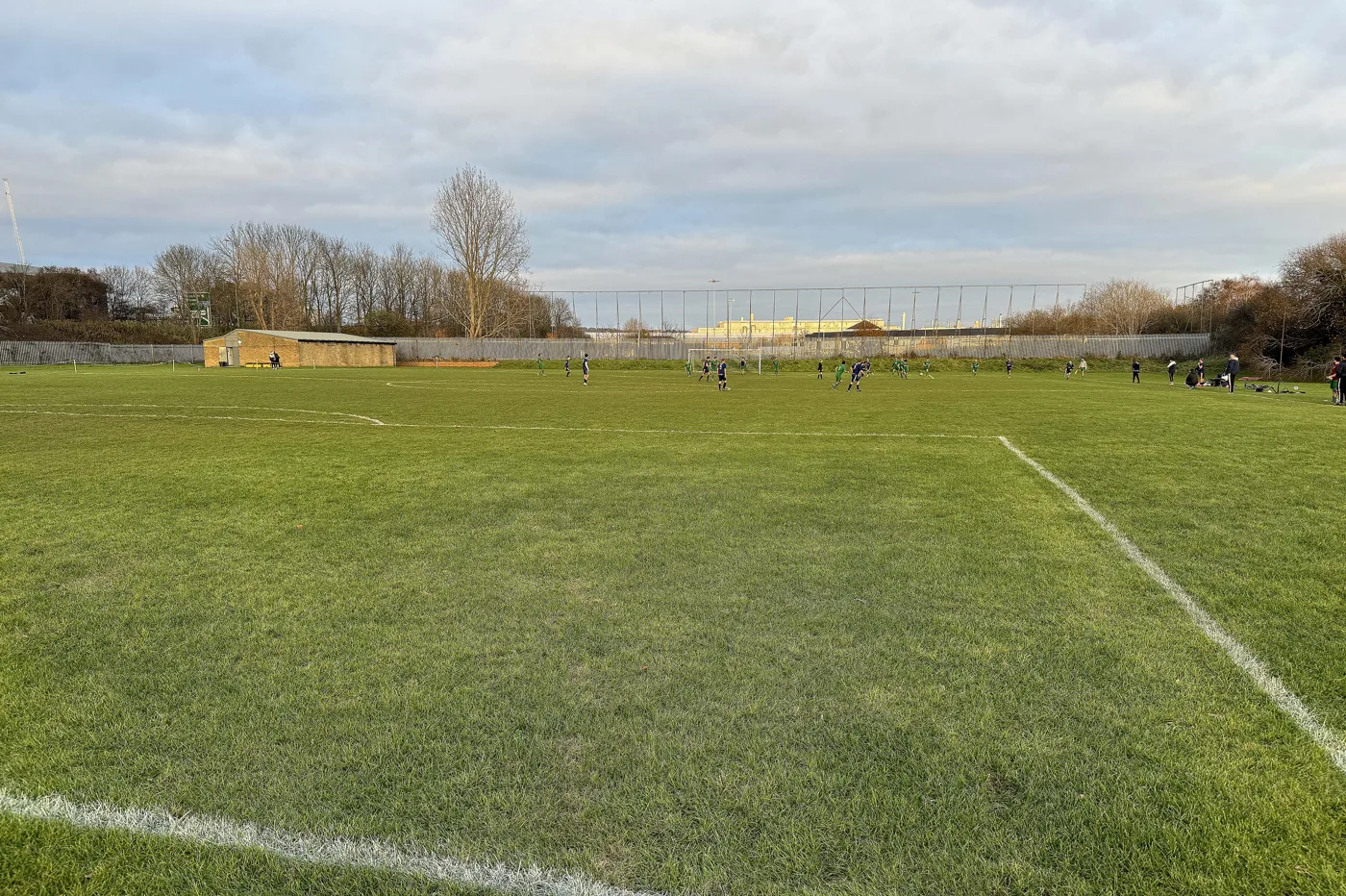

Oxford Stadium's operating company went into creditors' voluntary liquidation on 26 August. Its last accounts show net liabilities of £1.03m and 55 staff.
The company that ran Oxford Stadium has been put into liquidation. Two notices published in the London Gazette on 3 September record that Oxford Stadium Ltd resolved to wind itself up voluntarily on 26 August 2026.
The resolution notice names the company’s principal trading address as Oxford Stadium, Sandy Lane, Oxford. It is signed by Kevin Boothby, the company’s sole director. A second notice records the appointment of Matthew Hoy and Shane Biddlecombe of TruSolv Ltd, Southampton, as joint liquidators on the same date.
The type of liquidation is a creditors’ voluntary liquidation. That is the insolvent route, not the solvent members’ voluntary liquidation used to close a company that can pay everyone. The Gazette records that the liquidators were appointed by both members and creditors.
What the last accounts show
Oxford Stadium Ltd was incorporated on 23 November 2021 and has filed accounts only twice. The most recent cover the year to 31 December 2023 and were filed in December 2024. They are unaudited, under the small companies exemption, and the director elected not to publish a profit and loss account.
The balance sheet is the part that matters:
- Net liabilities of £1,030,632, more than double the £467,769 a year earlier.
- Creditors falling due within one year of £2,005,715, up from £1,260,559.
- Of that, £1,806,059 was “other creditors”, £108,077 trade creditors and £68,399 tax and social security.
- £117,890 of cash at the year end, against £628,830 of tangible fixed assets.
- An average of 55 employees through 2023, up from 31 in 2022.
Nothing has been filed since to update that picture. Companies House shows the accounts for the year to 31 December 2024 as overdue since 31 December 2025, and the confirmation statement as overdue since 18 July 2026. The register still lists the company as active, because it lags the Gazette by several weeks.
Three charges have been registered against the company: one in September 2024, satisfied in full the following February, one in June 2025 and one created on 27 April 2026. The registered office moved three times this year, from Boston in Lincolnshire to Sutton-in-Ashfield in January, to Oxton in Nottinghamshire in May, and now to the liquidators’ Southampton address.
Racing had already stopped
The liquidation follows a year in which the track went quiet.
The Greyhound Board of Great Britain runs the results service for licensed British greyhound racing. A query against its results feed on 7 September returned no meetings at all for Oxford. The same query returned a full card for Towcester, the Northamptonshire track run by the same promoter, including races run on 6 September. That is not proof of a formal licence decision, but it is what the sport’s own record shows.
The stadium’s website has gone too. oxfordstadium.co.uk now redirects to a GoDaddy page offering the domain for sale, checked on 7 September.
We could not confirm from the Greyhound Board today whether Oxford still holds a racecourse licence: its list of licensed stadia is built by script and could not be read. We have not seen a statement from the company or its liquidators beyond the Gazette notices.
A conservation area in its own right
Whatever happens next, the site is not ordinary land. Oxford City Council designated Oxford Stadium as its own conservation area on 9 April 2014.
The council’s own record says the site “has been used by the community for greyhound racing and speedway since 1939”, with evidence of an earlier unlicensed flapping track on the same ground. It describes the stadium as representative of inter-war sport and entertainment in a city then growing as a manufacturing centre.
The designation came a year after the last serious attempt to build on it. Oxford’s planning register shows application 13/00302/FUL, for the demolition of the stadium and the erection of 220 homes. It was withdrawn by the council on 24 June 2015, and a related appeal was withdrawn as well. A prior approval application for demolition, 13/00528/DEM, was lodged in the same year.
Nothing has been submitted for the site since. A search of the city council’s planning register on 7 September returned no application for Oxford Stadium later than 2013.
What it means for you
- If the stadium owes you money, the liquidators are the people to contact. TruSolv Ltd gave Neil McMahon, on 0808 196 8676, as the contact in both Gazette notices. Creditors’ claims go to the liquidators, not to the council.
- If you worked there, employees of an insolvent company can claim redundancy pay, notice pay, holiday pay and unpaid wages from the Insolvency Service’s redundancy payments service. You need the case reference from the liquidator.
- A liquidation is not a finding against anyone. It records that the company cannot pay its debts as they fall due. Directors of a liquidated company are free to run other companies unless a court says otherwise.
- The site is not about to become housing. Conservation area status does not prevent redevelopment, but any scheme needs planning permission, and there is no live application. If one comes in, it will appear on the city council’s register with a comment deadline.
We have asked nothing of the company because it no longer has anyone to ask: its sole director has passed control to the liquidators. If the liquidators or the promoter make a statement, we will add it here.
Also on The Oxford Post
- Oxford planning news: the Local Plan 2045 and the sites allocated for homes.
- Oxford roadworks and travel: what is closed in the city this week.
- Things to do in Oxford: what is on, and what it costs.
Have your say