
Band D is £2,675.54 in the unparished city, and Old Marston pays £32.25 more. The full A to H table for all five areas, and where 75p in every pound goes.
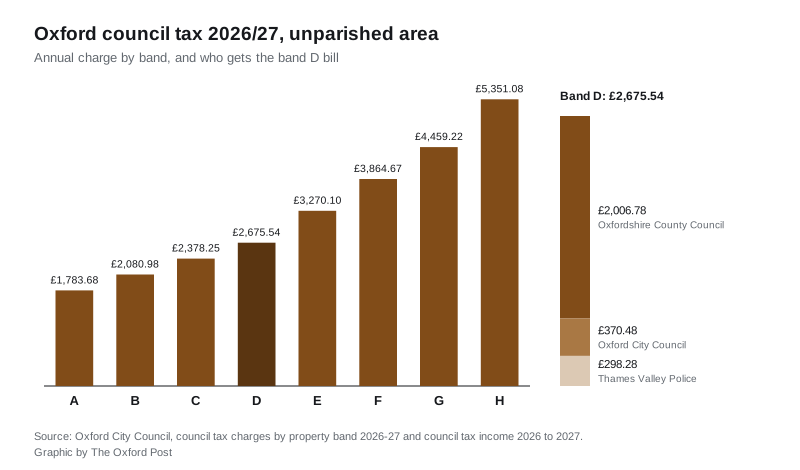
A band D home in most of Oxford pays £2,675.54 in 2026/27. Only £370.48 of that goes to Oxford City Council. Three quarters of the bill funds Oxfordshire County Council, which is not the authority that sends it to you.
Oxford is not a single-rate district. Four parishes sit inside the city boundary and each sets its own precept, so there are five different sets of charges. The gap between the cheapest and the most expensive is £32.25 a year at band D.
Every figure here was read from Oxford City Council’s own council tax pages on 1 September 2026.
The 2026/27 charges, band A to H
| Area | A | B | C | D |
|---|---|---|---|---|
| Unparished areas | £1,783.68 | £2,080.98 | £2,378.25 | £2,675.54 |
| Blackbird Leys | £1,784.12 | £2,081.49 | £2,378.83 | £2,676.19 |
| Littlemore | £1,799.16 | £2,099.03 | £2,398.88 | £2,698.75 |
| Risinghurst and Sandhills | £1,802.72 | £2,103.20 | £2,403.64 | £2,704.10 |
| Old Marston | £1,805.18 | £2,106.07 | £2,406.92 | £2,707.79 |
| Area | E | F | G | H |
|---|---|---|---|---|
| Unparished areas | £3,270.10 | £3,864.67 | £4,459.22 | £5,351.08 |
| Blackbird Leys | £3,270.89 | £3,865.60 | £4,460.31 | £5,352.38 |
| Littlemore | £3,298.47 | £3,898.19 | £4,497.91 | £5,397.50 |
| Risinghurst and Sandhills | £3,305.00 | £3,905.92 | £4,506.82 | £5,408.20 |
| Old Marston | £3,309.51 | £3,911.25 | £4,512.97 | £5,415.58 |
Source: the council’s council tax charges by property band 2026-27. Bands are set on what a property was worth on 1 April 1991, not today: band A is up to £40,000, band D is £68,001 to £88,000 and band H is over £320,000.
If you live in Headington, Cowley, Jericho, Summertown, Iffley, Rose Hill, Wolvercote, Barton or the city centre, you are in the unparished area and pay the top row. The four parishes are Blackbird Leys, Littlemore, Risinghurst and Sandhills, and Old Marston.
Blackbird Leys is the striking one. It is a parish, so its residents pay a parish precept on top, and yet a band D there costs only 65p a year more than the unparished rate. Old Marston, at the other end, pays £32.25 more.
Where the money goes
Three authorities share the bill. Only one of them collects it.
| Authority | Band D 2026/27 | Share |
|---|---|---|
| Oxfordshire County Council | £2,006.78 | 74.92% |
| Oxford City Council (including parish precepts) | £373.34 | 13.94% |
| Police and Crime Commissioner for Thames Valley | £298.28 | 11.14% |
Source: the council’s council tax income page. The £373.34 is the average across the whole city including parish precepts; excluding them it is £367.38. In the unparished area the city element works out at £370.48, which is £2,675.54 less the county and police precepts.
Everything Oxford City Council does, bins, parks, planning, housing, leisure centres and homelessness services, is funded by under a seventh of your bill.
What changed this year, and by how much
| Authority | 2025/26 band D | 2026/27 band D | Increase |
|---|---|---|---|
| Oxfordshire County Council | not published on this page | £2,006.78 | 4.99% |
| Thames Valley Police | not published on this page | £298.28 | 5.30%, or £15 |
| Oxford City Council (net of parishes) | £356.72 | £367.38 | 2.99%, or £10.66 |
| Oxford City Council (including parishes) | £362.45 | £373.34 | 3.00% |
The county’s 4.99% splits into 2.99% general expenditure and a 2% adult social care precept. Both sit just under the thresholds that would force a referendum. The city council’s own rise works out at about 20p a week for a band D home. The police precept went up by a flat £15, which is the largest percentage rise of the three.
The parish precepts
| Parish | 2025/26 | 2026/27 | Change |
|---|---|---|---|
| Littlemore | £85,609 | £89,899 | +5.0% |
| Old Marston | £65,650 | £67,619 | +3.0% |
| Risinghurst and Sandhills | £67,200 | £76,000 | +13.1% |
| Blackbird Leys | £54,389 | £57,109 | +5.0% |
Source: the council’s council tax income page; the percentages are our arithmetic on its figures. Risinghurst and Sandhills raised its precept by 13.1% this year, more than four times what Old Marston did, and it is the one figure on the page that stands out.
The unparished area is charged the same way. Because there is no parish council to maintain parks, allotments and ditches, the city council does that work itself and bills it as “Unparished Area Special Expenses”. That line rose from £734,560 to £773,943, an increase of 5.4%. Parish precepts and special expenses together came to £1,064,560.
Oxford’s tax base, the number of dwellings adjusted for discounts and expressed as band D equivalents, rose from 47,637.80 to 48,725.20. The council will raise £18,191,281 in council tax this year, up from £17,266,136.
Checking and challenging your band
Bands are set by the Valuation Office Agency, not by the council, and the council cannot change one.
- Check your band at gov.uk/council-tax-bands. You can look up any address, including your neighbours’, which is the usual way people find they are banded higher than an identical house next door.
- Challenge your band at gov.uk/challenge-council-tax-band. A challenge can move a band up as well as down.
Do not use the council’s appeal form for a band dispute. Its appeals page is for liability and for discount or exemption decisions only.
If you do appeal a council decision, the timings are strict. The council has two months to respond. If it does not, you can go to the Valuation Tribunal, and you must do so within four months of your original appeal. If it does respond and you disagree, you have two months from its reply. You must keep paying while an appeal is running. If you win, the overpayment is refunded.
Discounts and support
Single person discount: 25%. Available where one adult over 18 occupies the property. Applications and cancellations both go through the same council form.
Students. This matters more in Oxford than almost anywhere. A property is exempt if everyone in it is a full-time student. If one full-time student lives with one non-student adult, the student is disregarded and the adult’s bill drops by 25%. Two or more non-student adults means no exemption and no discount, however many students also live there.
Council Tax Reduction. Oxford moved its working-age scheme to income bands for 2026/27, awarding a straight percentage discount instead of a calculated amount.
| Band | Weekly income | Discount |
|---|---|---|
| 1 | £0 to £480 | 100% |
| 2 | £480.01 to £530 | 75% |
| 3 | £530.01 to £580 | 50% |
| 4 | £580.01 to £660 | 25% |
| 5 | £660.01 and over | 0% |
Source: the Council Tax Reduction Scheme. Oxford still awards up to 100%, where many councils cap working-age support at 70% or 80%. Savings above £16,000 disqualify you outright, and savings between £6,000 and £15,999.99 are treated as income at £1 a week for every £250 above £6,000. Deductions apply for other adults in the household, from £5.20 to £15.95 a week depending on their earnings.
Empty homes and second homes are charged more, not less. A property empty and unfurnished for a year carries a 100% premium, meaning a double bill. At five years it is 200% and at ten years 300%. The premium stays with the property through a change of owner or tenant. Since April 2025 most furnished second homes carry a 100% premium too, with exemptions including armed forces accommodation, annexes, probate within 12 months, and properties actively marketed for sale or rent for up to 12 months. Details are on the premium page.
Other reductions exist for disability, severe cognitive impairment, annexes and hardship, all listed on the council’s discounts and exemptions page.
Also on The Oxford Post: Oxford house prices, Oxford bin collection days and parking in Oxford.
Have your say