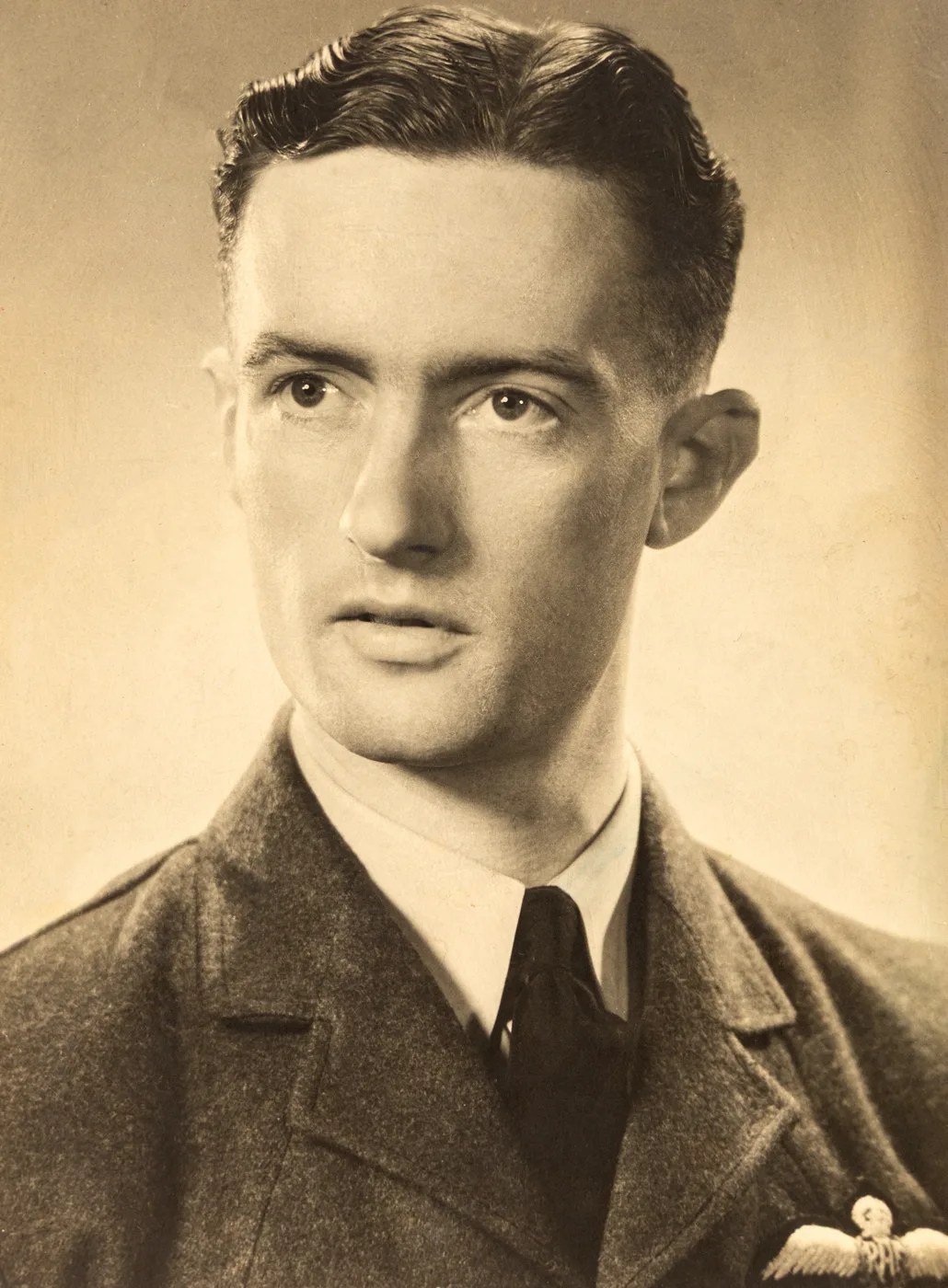

Leslie Valentine flew a Boston bomber at 50 feet over the D-Day beaches. His DFC, Croix de Guerre and logbooks go to auction in Scarborough on Thursday.
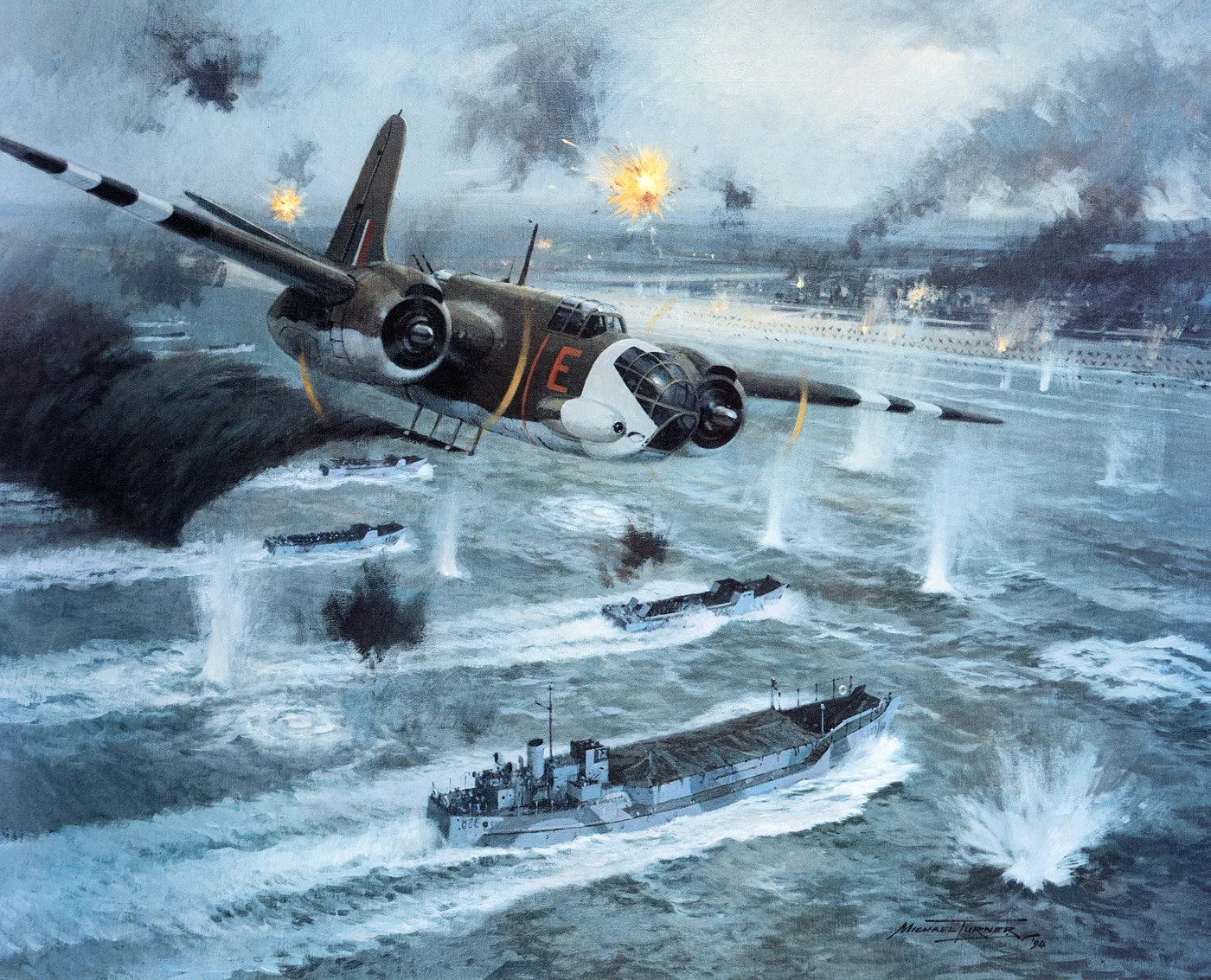
The medals of Leslie Valentine, a D-Day bomber pilot who spent his retirement in Hethe, near Bicester, are to be sold at auction on Thursday 1 October. On D-Day he flew a Boston bomber over the Normandy landing beaches at a height of just 50 feet, laying a smokescreen to cover the invading troops while Allied battleships and German coastal guns fired over and around him.
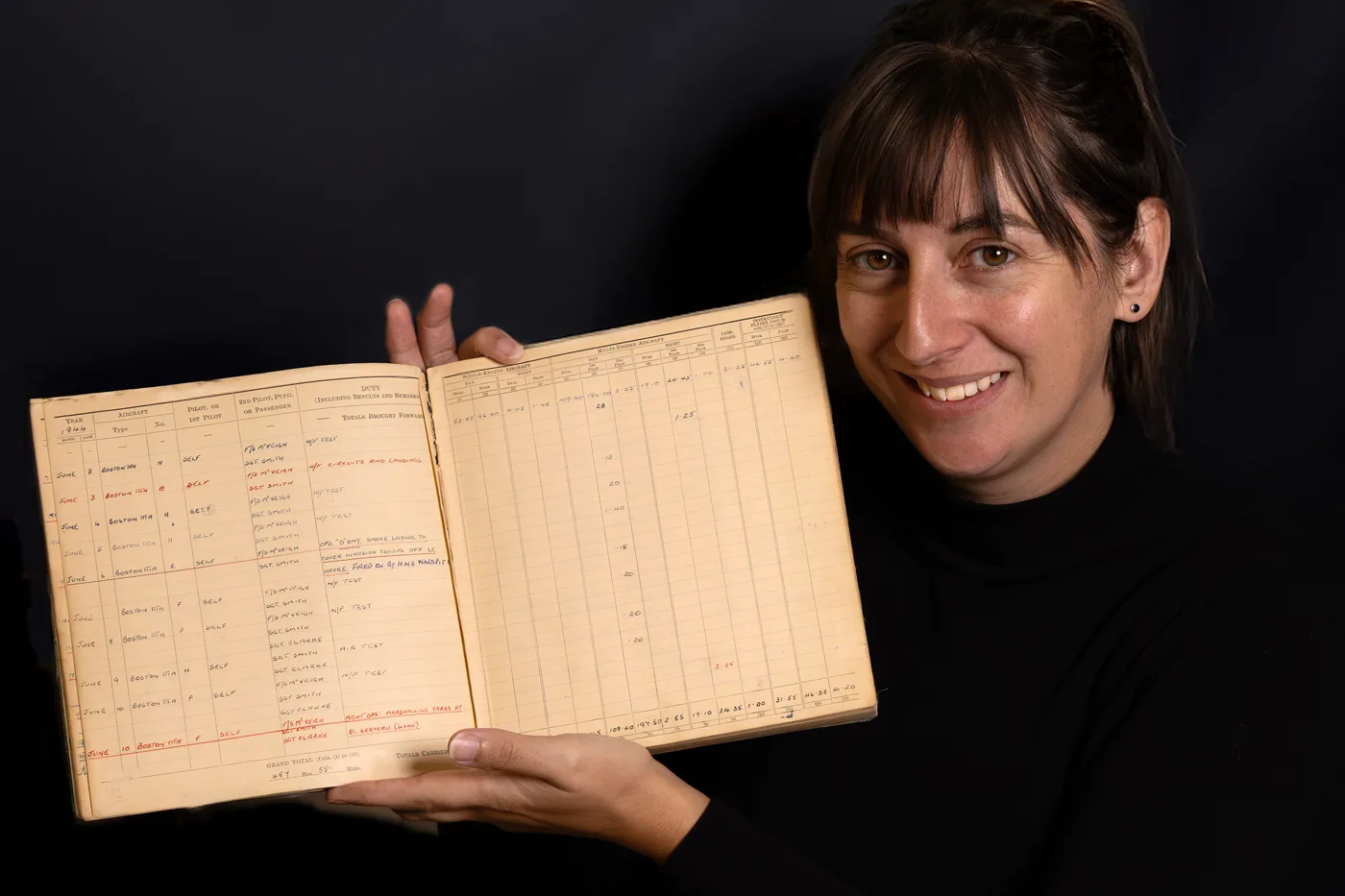
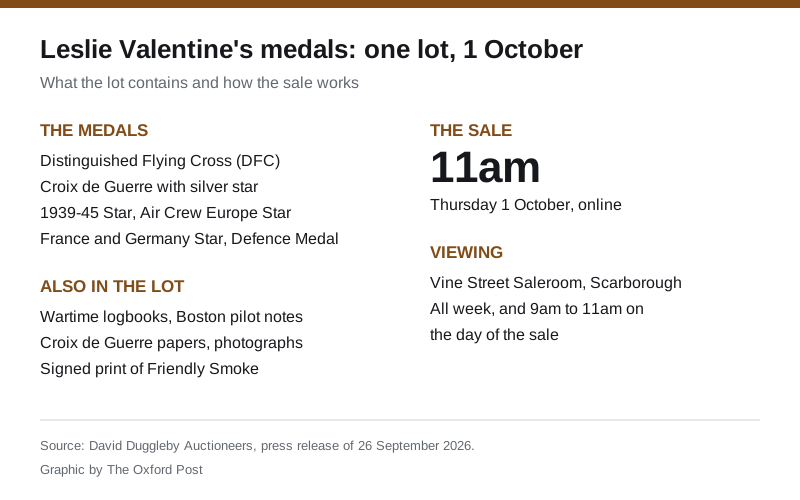
The collection has been entered by his son, Dudley Valentine, and will be sold as a single lot by David Duggleby Auctioneers in Scarborough, according to a release the auctioneers sent to The Oxford Post on Saturday. It includes his Distinguished Flying Cross, his Croix de Guerre with silver star and the logbook in which he recorded the D-Day mission.
“If I’d even sneezed that would have been it”
Flying Officer Valentine was 24 and flying with 88 Squadron from RAF Hartford Bridge in Hampshire. His aircraft, Boston E Easy, was so low that ground troops could fire at it too, and the auctioneers say it was shot at by everyone, including British forces who did not realise it was on their side. Two of the aircraft on the mission were lost. He brought his back to Hartford Bridge unharmed.
Interviewed many years later, he described holding the aircraft level through the barrage:
“The noise of the shells was deafening. I was flying at 250 mph and I had to hold it steady, very steady. At that speed and height if I’d even sneezed that would have been it.”
He wrote the mission up in his logbook in one sentence, and added: “Was fired on by HMS Warspite.” Warspite was one of seven Allied battleships involved in D-Day, alongside 23 cruisers, 93 destroyers and two gunboats, the auctioneers note.
From medical school to Bicester
Jessica Tarver, a militaria specialist at David Duggleby, said: “We were honoured to be invited to handle such a fascinating collection relating to the astonishing story of a remarkable World War Two hero.”
She traced his route to that morning over Normandy:
“Glasgow-born Leslie Valentine was just 24 when he flew that D-Day mission but he had already been in the war for four years, quitting medical school on the outbreak of the conflict in 1939 and volunteering, joining the Highland Light Infantry, a regiment that was involved in heavy fighting during the retreat to Dunkirk and the evacuation.”
“Back at the barracks in Glasgow a note in the NAAFI asked if anyone was interested in flight training. Almost the whole battalion put their names down but Leslie was one of just two that were accepted, and the other one was taken ill, so he was the only one to go for initial pilot training in Canada.”
“He completed his training on Blenheim and Boston bombers at RAF Bicester and its satellite station at Finmere before joining 88 Squadron at Hartford Bridge in Hampshire, which was the field from which the D-Day mission was flown.”
D-Day was not the end of it. “Having miraculously survived the astonishing operation on D-Day, Flying Officer Valentine would go on to complete two back to back tours, sixty operations, involving daylight bombing of bridges, rail yards, enemy supply lines, submarine pens and V1 rocket launching sites among other things,” she said.
Retirement five miles from the airfield
After the war he went back to medical school and finished his studies. “War over, he returned to the medical school to complete his studies, later working as a physiotherapist in Scotland for several years before switching to a career in the pharmaceutical industry, moving south of the border and eventually becoming a sales manager with a leading national company,” Ms Tarver said.
In 1987, in retirement, he moved to Hethe, five miles from RAF Bicester, where he had learned to fly bombers. He died in 2014 at the age of 95. The auctioneers say he is thought to have been the last British light bomber pilot of the Second World War.
The painting he did not know he was in
The D-Day flight is the subject of Friendly Smoke, a painting by the aviation artist Michael Turner (1934 to 2025). Mr Valentine’s own signed limited edition print of it is part of the lot, and it came to him by chance.
“Incredibly the print was bought for Mr. Valentine by his son who was unaware that it was his father’s aircraft depicted in the picture,” Ms Tarver said. “The eventual realisation resulted in the artist visiting Hethe, and signing the print ‘Thanks for posing for my painting!’”
Dudley Valentine, himself a former bomber crewman who served as a navigator in Vulcans, is now in his eighties. The auctioneers say he has no one to pass the collection on to and wants it to go to someone who will treasure and preserve it.
What is in the lot
Alongside the DFC and the Croix de Guerre, which the auctioneers describe as one of France’s highest accolades for heroic deeds in the liberation of France, the medal group holds his campaign awards: the 1939-45 Star, the Air Crew Europe Star, the France and Germany Star and the Defence Medal.
It also includes his wartime logbooks, his pilot notes for the Boston, the paperwork for the Croix de Guerre, photographs and other ephemera, and the signed Friendly Smoke print.
What it means for you
The lot is in David Duggleby’s Militaria, Medals and Sporting Guns sale, a fully automated online auction that starts at 11am on Thursday 1 October. The catalogue is on the David Duggleby website. The release does not give an estimate.
Anyone who wants to see the medals and logbooks in person can view them at Duggleby’s Vine Street Saleroom in Scarborough during the week, and on Thursday morning from 9am until the sale opens at 11am. The auctioneers’ contact for the sale is Sam Ogle on 01723 507111.
Have your say