
The OED's 23 September update adds more than 400 words, including mountweazel, a fake entry planted to catch copiers. Six come from Welsh English.
The Oxford English Dictionary published its autumn update on Wednesday 23 September. More than 400 new words, phrases and senses went in. More than 700 existing entries were revised. (Oxford University Press, 23 September 2026)
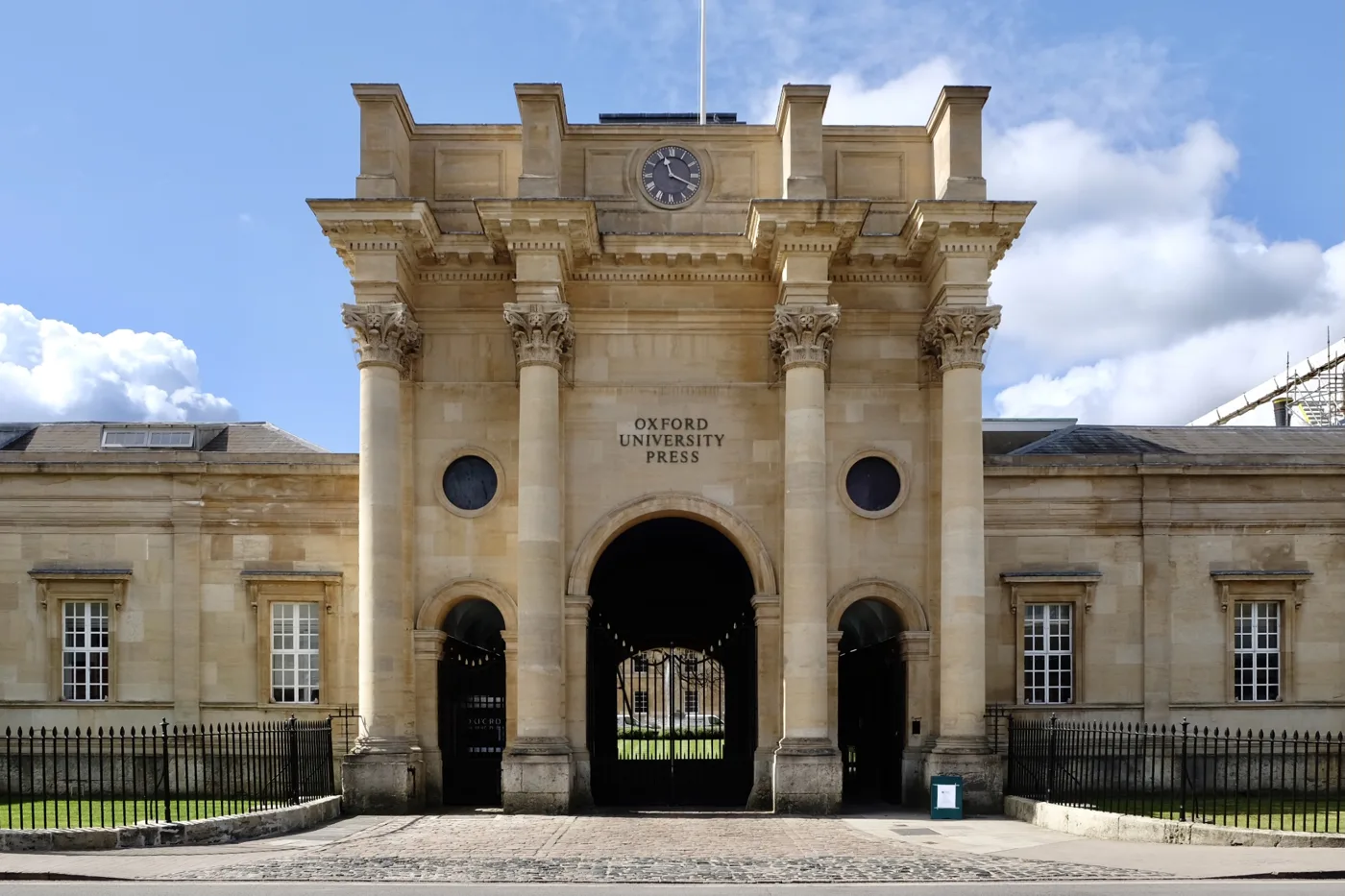
The dictionary is edited in Oxford, by Oxford University Press, whose registered address is Great Clarendon Street, OX2 6DP. It is a historical dictionary rather than a list of approved words: it now holds more than 500,000 entries and 3.5 million quotations, covering over 1,000 years of English. It is updated every quarter.
Among the new entries this time:
- hot yoga, dated to 1995, yoga practised in a room heated to 32 to 40°C
- overnight oats, which the OED traces back to at least 1987
- cold brew, Café Cubano, café con leche and cafezinho
- mountweazel, a fake entry planted in a reference work to catch copiers
- bothsidesism, no-platforming, crypto mining and attention economy
- the social media sense of timeline, which the OED dates to 2006
The best word in the update is a fake
The one the editors are most pleased with is mountweazel. The OED defines it as “an invented or fake entry in a reference work (esp. a dictionary or an encyclopedia), a database, etc., typically used by the publisher to identify plagiarism that constitutes an infringement of copyright”.
The word comes from a person who never existed. The fourth edition of the New Columbia Encyclopedia, published in 1975, carried an entry for Lillian Virginia Mountweazel, a photographer from Bangs, Ohio. She had turned “from fountain design to photography in 1963” and died at 31 in an explosion while on assignment for Combustibles magazine. None of it was true. She had been invented so the publishers could spot anyone copying their book. The word was first used in its current sense in the New Yorker in 2005.
The note on the new words was written by Craig Leyland, an executive editor on the OED. On whether the dictionary itself contains any mountweazels, the answer is: “We can’t say, of course.” The note also raises the obvious modern question, asking whether such traps are now of less use or more, “given the prevalence of internet scraping and AI copying”. (OED, September 2026)
The same batch of reference-related revisions brought in thesaural, an adjective with two senses. The older, from 1844, means relating to a treasury or to the post of treasurer. The one you would expect, relating to a thesaurus, is only recorded from 1948.
Six new words from Welsh English
Six of the new entries are not Oxford words at all. They are Welsh English, recorded in Wales, and the OED credits Dr Robert Penhallurick as its consultant for Welsh English this quarter. (OED, September 2026)
The six new Welsh English entries are:
- bwbach (1724), a benevolent though sometimes mischievous spirit resembling a goblin, which lives in homes and farm buildings and helps with the work
- bachgen (1888), a word for “boy”, also used as a term of endearment
- boys bach (late 19th century), a familiar way of addressing a group, and from the early 20th century an exclamation meaning roughly “my goodness!”
- in one’s oils (1900), to be at ease or in one’s element
- now in a minute, meaning in a moment or very soon, used in Irish English too
- twpsyn (1941), an idiot or a fool
Bwbach is the oldest word in the whole of this quarter’s world English update. Now in a minute looks like a contradiction in English, but the OED says it follows the pattern of the Welsh phrases nawr mewn munud and mewn munud yn awr.
The world English note, by OED executive editor Danica Salazar, makes a point of the fact that twpsyn arrived in the same update as bimpert, a Bermudian word for a stupid or foolish person, and hamma, the Bermudian word for a friend. Wherever English is spoken, it says, two of the shared concerns are “what to call people we consider friends, and what to call people we do not think are very bright”.
This update also took in words from Bermudian, Caribbean, East African and New Zealand English, including douen and jablesse from Caribbean folklore, the Ugandan dish muchomo, and Crate Day in New Zealand.
Gym, gi and two dogs with one stone
The revisions turned up older material than the new words did.
Gym has been a verb, meaning to exercise at a gym, since the first decade of the 20th century in the United States. Gymming followed in the next decade. Gi, the heavy cotton uniform worn for judo and similar martial arts, has been used in English since the 1950s, and has now produced no-gi for formats fought in ordinary sportswear.
The editors also found to kill two dogs with one stone, meaning to achieve two things at once. It is chiefly Scottish, first recorded in 1701, and is still in use. That is 90 years later than the version with birds.
Two other notes are worth having. The etymology note, by the OED’s deputy chief editor Philip Durkin, points out that this quarter is heavy with medieval borrowings from Anglo-Norman French, including doubt, equity, fantasy and garner. And the pronunciation note, by Catherine Sangster, records the “skoon” pronunciation for the Stone of Scone, which is not the argument people usually have about the word scone. (OED, September 2026 update)
What the dictionary is worth to Oxford
Oxford University Press is a department of the University of Oxford, not a separate company, so the money it makes goes back into the University.
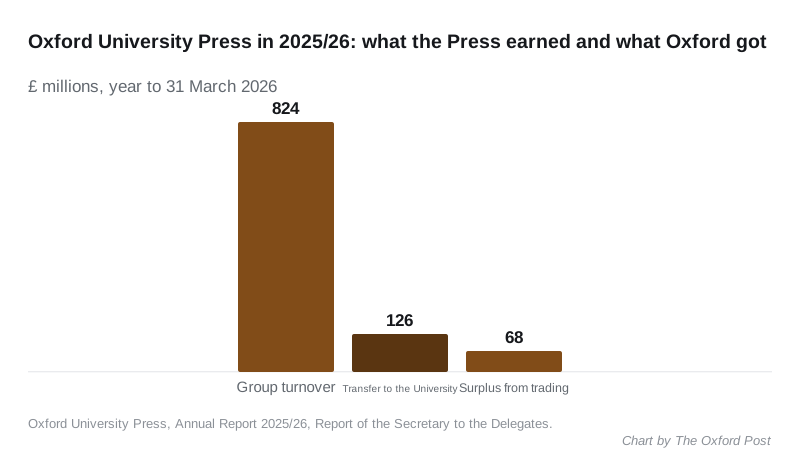
The Press reported group turnover of £824m in 2025/26, with headline turnover growth of 4%, and digital now 46% of revenue. Its surplus from trading was £68m. Its transfer to the rest of the University was £126m, including a periodic transfer of £85m. The report says that money supports the John Fell Fund and the Clarendon Fund, which is 25 years old this year. (Oxford University Press, Annual Report 2025/26)
The same report records some Oxford work. OUP says it worked with Assisted Reading for Children in Oxfordshire to recruit staff who could give one-to-one reading help to children in local schools. Worldwide over the year it donated 154,000 books and £127,000, and staff gave 957 hours to voluntary activities.
The Vice-Chancellor, Professor Irene Tracey, writes in the report that she is “so incredibly proud of what it contributes to Oxford and the world”.
What it means for you
A subscription to oed.com costs money, and most of the dictionary sits behind it. You do not have to pay it if you live here.
Oxfordshire County Council gives every library member free access to the full Oxford English Dictionary, at home as well as in branches. The council’s reference pages describe it as “the definitive dictionary of the English language, tracing the history, origin, and meaning of more than 600,000 words through time”. You sign in with your nine-digit library membership number, with no spaces. The same page also gives free access to Oxford Reference Online, which is more than 170 Oxford University Press reference works, and to the Oxford Dictionary of National Biography. (Oxfordshire County Council)
If you are not a member, you can join Oxfordshire libraries online for nothing.
The editors’ own notes on this update, which are free to read, are the best way in: the new words note, the world English note, and the full list of what was added and revised are all published on the OED site.
We also cover the University itself, including Oxford’s fall to fifth in the Good University Guide.
Have your say